MEP Engineering for Vivariums:
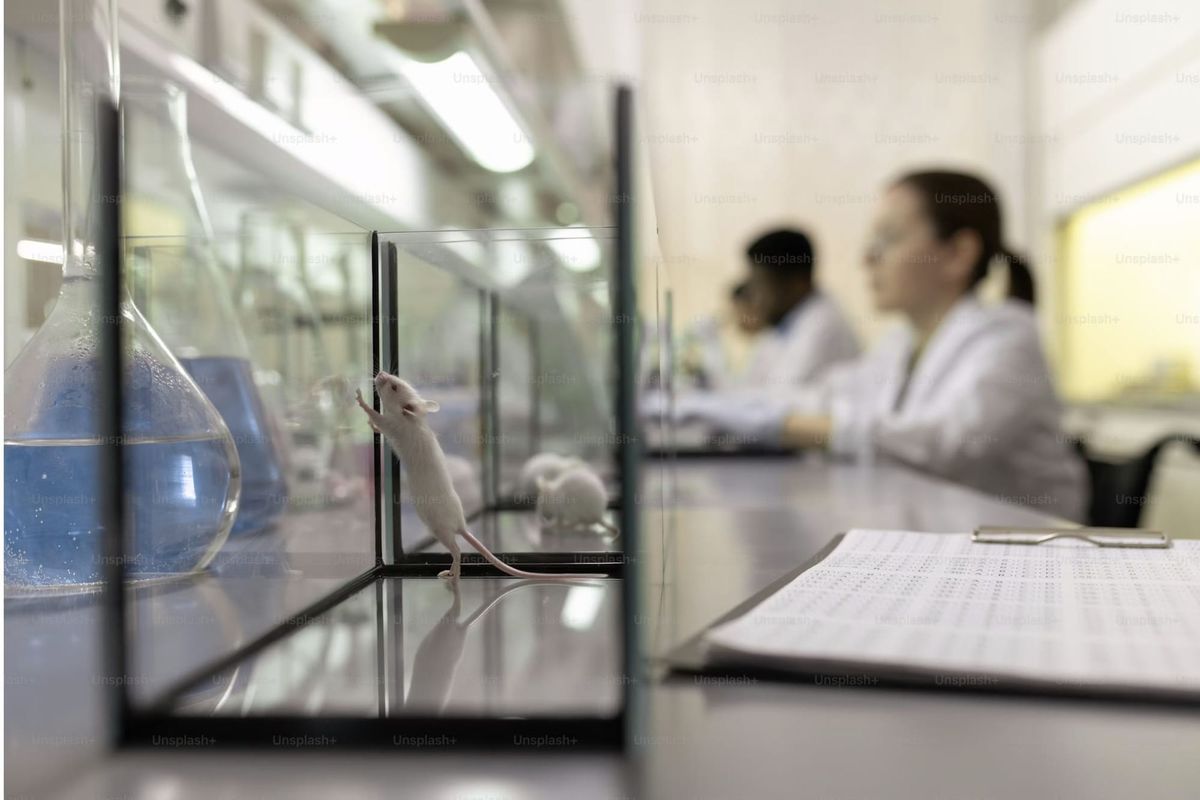
A mouse doesn't go to HR or write complaint letters.
It just skews your data, compromises your research, and quietly costs your institution months of work before anyone figures out what went wrong.
That's the thing about vivarium MEP design. The consequences of getting it wrong aren't always loud or obvious. They show up in stressed animals, contaminated studies, failed audits, and very uncomfortable conversations with your IACUC committee.
If you're an architect or building owner planning an animal research facility, especially inside a multi-story or high-rise building, this article is for you. Not because vivarium MEP is impossibly complicated. But because the decisions that matter most are the ones that look simple on paper and turn into expensive problems in the field.
This is the part they skip in architecture school.
Why Vivariums Are Not Just "Another Lab"
A lot of people treat vivariums like a slightly specialized lab with some extra ventilation. That framing leads to undersized systems, poor planning, and facilities that don't perform the way research programs need them to.
Vivariums are alive. Literally.
The animals inside are not just occupants; they are the experiment. Their environment IS the data. Temperature swings, humidity fluctuations, noise intrusion, odor crossover, and air pressure imbalances don't just make the space uncomfortable. They invalidate research.
And when you put a vivarium inside a high-rise building, every one of those challenges gets harder.
This article mostly focuses on rat vivariums for biotech research and biology studies.
Noise: The Invisible MEP Problem
Here's something that surprises a lot of architects the first time they work on an animal research facility:
Mice can hear things you can't.
Rodents are sensitive to high-frequency sound and ultrasonic ranges well above human hearing. That means a mechanical system that sounds perfectly quiet to every person in the building can be actively stressing the animals on the vivarium floor.
Stressed animals don't behave normally. Abnormal behavior skews data. Skewed data means compromised research.
Sources of problematic noise in vivarium MEP design include:
- Variable frequency drives (VFDs) on HVAC equipment
- Emergency generator systems during testing cycles
- High velocity air moving through ductwork and diffusers
- Pumps and cooling equipment in adjacent mechanical spaces
- Plumbing systems running through or near animal holding rooms
The fix isn't complicated in concept. But it requires thinking about it early.
Emergency Systems and Why They Keep Vivarium Engineers Up at Night
Emergency systems — generators, fire alarm devices, emergency exhaust — are not optional. They are code required, life safety critical, and completely non-negotiable. They are also extremely loud.
Ever been woken up in the middle of the night due to a fire alarm test or false alarm?
A fire alarm horn strobe in or near a vivarium space can cause acute stress responses in research animals.
A generator test cycle at 2am on a Tuesday can affect behavioral studies running on a tight timeline.
Emergency exhaust activation can momentarily destabilize pressure relationships that took careful engineering to establish.
This doesn't mean you skip emergency systems. It means you think carefully about:
- Location of alarm devices relative to holding rooms
- Generator exhaust routing and acoustic treatment
- Emergency mode sequences and how quickly systems recover
- Notification protocols so research staff know when system tests are scheduled
Redundancy: Because "We'll Fix It Tomorrow" Is Not An Option
In most building types, an HVAC system going offline for a few hours is an inconvenience.
In a vivarium, it can be a catastrophe.
Animals cannot self-regulate their environment. A loss of ventilation in a holding room can cause temperature and humidity conditions to deteriorate rapidly.
This is why vivarium MEP systems are designed with redundancy. Not as a luxury. As a baseline requirement.
At a high level, redundancy in vivarium HVAC typically means:
N+1 for critical air handling If you need one air handling unit to serve a space, you have two. If one fails, the other carries the load while repairs happen.
Redundant exhaust Exhaust is not optional in a vivarium. Loss of exhaust means loss of pressure control, odor containment, and biosecurity. Backup exhaust capacity is standard. The backup fan should also be already running and not cold starting to ensure containment.
Monitoring and alarming Redundant equipment only helps if someone knows when to switch to it. Environmental monitoring — temperature, humidity, pressure differentials — with alarm notification to facilities staff is essential.
Emergency power Critical vivarium systems should be on emergency power. Generators need to be sized and sequenced to support vivarium loads without delay.
Redundancy costs money upfront. It costs much more when it's missing.
Clean Corridors, Dirty Corridors, and Why the Line Between Them Is Sacred
If you've never worked on an animal research facility before, the corridor strategy might be the most important concept to understand.
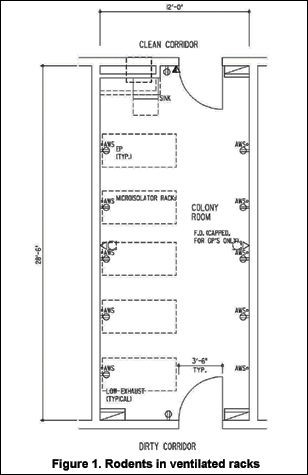
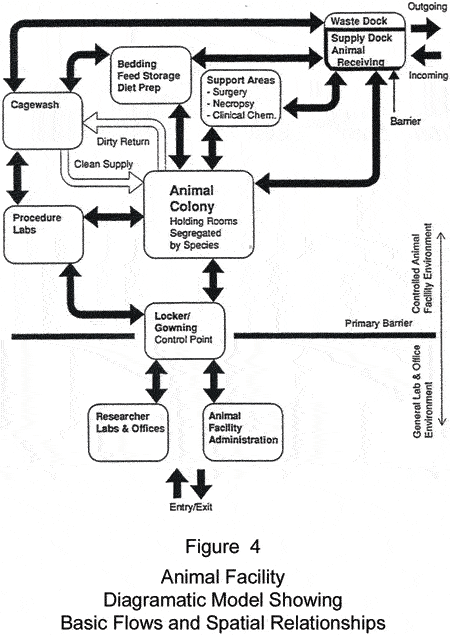
Vivariums are typically designed around a clean/dirty separation, a physical and operational boundary between spaces that handle clean materials and spaces that handle soiled ones.
Here's the basic flow:
- Clean side: Fresh bedding, clean cages, sanitized supplies, and animals moving into holding
- Dirty side: Soiled cages, waste materials, used bedding, and everything moving out
The MEP systems have to support and reinforce that separation — not undermine it.
Pressure relationships matter here enormously.
Clean corridors are typically maintained at positive pressure relative to animal holding rooms. Dirty corridors and cage wash areas are maintained at negative pressure. The airflow direction follows the contamination control logic; always moving from clean to less clean, never the reverse.
When pressure relationships are designed correctly, airborne contaminants follow the intended path. When they're wrong or when a door opens and the pressure cascade doesn't respond correctly — the boundary between clean and dirty becomes theoretical rather than real.
Cage Wash: The Room That MEP Engineers Take Very Seriously
Cage wash rooms are not glamorous. They are also not simple.
The cage washing process involves:
- High temperature water
- Chemical sanitizing agents
- Large amounts of steam and humidity
- Soiled bedding and animal waste
- Significant exhaust requirements
- Floor drains handling a serious load
From an MEP standpoint, cage wash areas need:
- Dedicated exhaust — high volumes, often with odor control considerations
- Makeup air that doesn't compromise pressure relationships in adjacent spaces
- Plumbing designed for heavy use — hot water capacity, drain sizing, backflow prevention
- Humidity control to prevent moisture migration into adjacent spaces
- Thermal considerations — the heat load from cage washers is significant
Cage wash rooms also sit at the intersection of the clean/dirty boundary. Everything coming in is dirty. Everything going out should be clean. The MEP systems have to support that transition reliably every single day.
Common Mistakes on Vivarium Projects
1. Treating it like a regular lab It isn't. The performance standard is different because the occupants are the experiment.
2. Underestimating exhaust infrastructure Vivarium exhaust volumes are significant. Routing in a multi-story building requires shaft space that needs to be reserved early.
3. Ignoring noise at the equipment selection stage By the time acoustics becomes a formal discussion, the equipment is often already specified. Noise should be a selection criterion from the start.
4. Designing pressure relationships without accounting for doors and transitions A pressure relationship that works in a steady state model may not perform the way you expect when doors are opening and closing constantly throughout the day.
5. Forgetting that dirty cage removal is a logistics problem, not just an operational one In a high-rise, vertical transport of soiled materials is a design problem that affects elevators, corridors, finishes, and biosecurity strategy on multiple floors.
6. Value-engineering redundancy This is the one that tends to hurt the most. Redundancy in vivarium HVAC is not a luxury line item. It is baseline infrastructure for a facility that cannot afford downtime.
Final Thought
Vivariums are one of the most demanding building types from an MEP standpoint because the performance requirements are unforgiving and the consequences of failure are not just operational.
A mouse that's too warm, too stressed, or breathing recirculated air from the wrong side of a pressure boundary doesn't generate bad data loudly. It generates bad data quietly, over time, in ways that are hard to trace.
The MEP systems in a vivarium are not support infrastructure. They are part of the research environment.
And if you're putting a vivarium in a high-rise building in Los Angeles — call an MEP engineer before the floor plans get comfortable.
On a multi-story biotech retrofit in the Bay Area, a single pressure relationship error rippled all the way to failed research audits. Wasn’t discovered until months after occupancy.
Frequently Asked Questions
What air change rates are typical for vivarium spaces? Animal holding rooms typically require between 15 and 20 air changes per hour at minimum, with some protocols requiring more. Procedure spaces may require higher rates depending on the activities performed. These rates drive significant airflow volumes and have a major impact on mechanical system sizing.
Do vivariums always need 100% outside air? In most cases, yes. Recirculation of air within animal holding spaces is generally not acceptable due to odor, particulate, and biological contamination concerns. 100% outside air systems are standard, which significantly increases the energy load and the size of heating and cooling equipment.
How is noise from MEP systems managed in vivarium design? Through a combination of equipment selection, vibration isolation, duct lining and acoustic treatment, careful routing away from sensitive spaces, and air distribution devices selected for low velocity and low noise generation. It requires attention at multiple stages of design early on.
What makes high-rise vivarium design more complex than ground-level facilities? Stack effect, exhaust routing over greater vertical distances, dirty material transport between floors, mechanical room planning in a constrained multi-story context, and noise and vibration transmission through structure all add layers of complexity that don't exist in single-story research buildings.
When should MEP engineering be engaged on a vivarium project? Before the floor plan is finalized. Ideally during early programming and schematic design, when decisions about mechanical room location, shaft allocation, floor-to-floor height, and space adjacencies can still be influenced by engineering requirements.
Ready to plan your vivarium or animal research facility in Los Angeles? Ortiz MEP Studio provides MEP consulting for research, life sciences, and specialty technical facilities throughout Southern California. Visit ortizmep.com to learn more or get in touch.